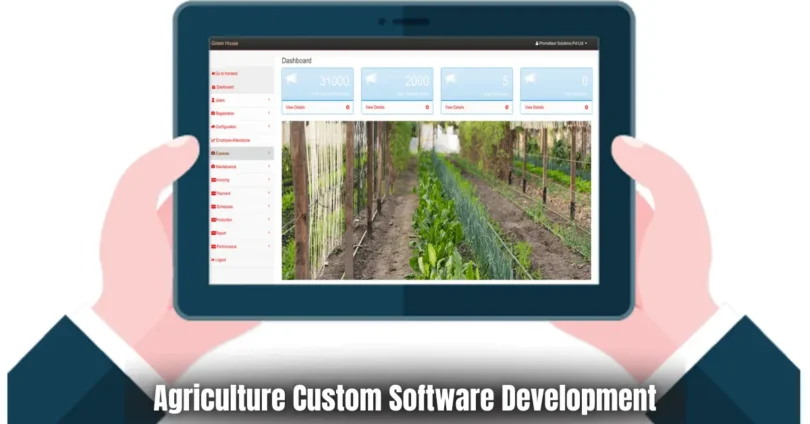
Agriculture is evolving, and technology is playing a big role in this change. One of the key drivers of this transformation is Agriculture custom software development. This technology helps farmers and agribusinesses manage their operations more efficiently, from crop monitoring to supply chain management.
Agriculture custom software development allows for tailored solutions that meet the specific needs of farms and agricultural businesses. By using these tools, farmers can make better decisions, save time, and improve their overall productivity. Let’s dive into how custom software can revolutionize the way agriculture works!
What is Agriculture Custom Software Development?
Agriculture custom software development refers to the process of creating software solutions specifically designed to meet the unique needs of the agriculture industry. These solutions are built to help farmers manage different aspects of their farming operations, from crop management to resource allocation.
- Tailored solutions for farming needs.
- Designed to handle farm-specific tasks.
- Helps streamline farming operations.
Relevance in Modern Farming Practices
Custom software development is becoming essential for modern agriculture as it enables better management and optimization of farm resources. Here’s why it’s so important:
- Improved Efficiency: Custom software helps automate tasks, reducing manual work and boosting productivity.
- Data-Driven Decisions: With real-time data collection, farmers can make more informed choices about their crops and resources.
- Resource Management: It allows better tracking of water usage, fertilizers, and other resources, leading to cost savings and sustainability.
- Scalability: Custom software can grow with the farm, adapting to new needs as the business expands.
Benefits of Agriculture Custom Software Development
Agriculture custom software development offers several benefits that directly improve the efficiency and effectiveness of farming operations. Below are some of the key advantages:
Increased Efficiency and Productivity
Custom software helps automate and streamline daily farming tasks, allowing farmers to focus on more strategic activities.
- Automates repetitive tasks like watering schedules, fertilization, and harvesting.
- Improves workflow by connecting various processes, making them faster and more coordinated.
- Real-time monitoring helps track crop health and soil conditions, reducing time spent on manual checks.
Cost Savings and Resource Optimization
By tracking resources accurately, custom software helps farms save money and use resources more wisely.
- Optimizes resource use, reducing waste of water, fertilizers, and other inputs.
- Reduces operational costs through automated processes and efficient labor management.
- Prevents overproduction by providing insights into the best planting and harvesting times.
Improved Data Management and Decision-Making
Agriculture custom software enables farmers to collect and analyze data more effectively, leading to better-informed decisions.
- Centralized data storage helps organize farming data in one place for easy access and analysis.
- Better forecasting using data on weather patterns, soil conditions, and crop performance.
- Actionable insights guide decision-making, like when to irrigate, fertilize, or harvest for maximum yield.
Key Features of Agriculture Custom Software
Agriculture custom software comes with several powerful features designed to make farming more efficient, productive, and sustainable. Here’s a breakdown of the key features that are essential for modern agriculture:
Farm Management Tools
These tools help farmers oversee all aspects of their farm, from planning to daily operations.
- Task scheduling to ensure timely planting, watering, and harvesting.
- Resource tracking for managing labor, equipment, and inventory.
- Budgeting and financial tools to track farm expenses and profits.
Crop Monitoring and Management
Custom software allows farmers to keep a close eye on their crops, ensuring optimal growth and health.
- Soil health tracking to measure nutrient levels, moisture, and pH.
- Pest and disease detection with alerts to prevent crop damage.
- Growth tracking for each crop, providing insights into planting and harvesting times.
Real-Time Data Collection and Analysis
Collecting and analyzing data in real-time helps farmers make informed decisions quickly.
- Sensors and IoT devices gather data on soil conditions, weather, and crop health.
- Data visualization tools present key insights through easy-to-understand charts and graphs.
- Instant updates allow farmers to act on issues before they become critical.
Supply Chain Tracking and Logistics
Managing the flow of goods from farm to market is crucial, and custom software makes it easier.
- Inventory management for tracking crops from harvest to distribution.
- Logistics coordination for managing delivery schedules and routes.
- Real-time updates on the status of shipments, ensuring on-time deliveries.
Types of Custom Software for Agriculture
Custom software for agriculture comes in different forms, each serving specific needs of farmers and agribusinesses. Here are the main types of custom software solutions used in modern farming:
Farm Management Software
Farm management software helps farmers manage day-to-day activities and optimize farm operations.
- Task and schedule management for planting, irrigation, and harvesting.
- Resource tracking including labor, equipment, and inventory.
- Financial tools to manage budgets, track expenses, and increase profitability.
Precision Agriculture Solutions
Precision agriculture software uses technology to monitor and manage farm conditions with high accuracy.
- GPS technology for accurate field mapping and tractor guidance.
- Variable rate technology (VRT) for adjusting inputs like water, fertilizers, and pesticides.
- Soil and crop sensors to provide real-time data for more efficient farming practices.
Inventory and Logistics Software
This type of software helps manage the movement of goods and supplies from the farm to the market.
- Stock tracking to manage supplies like seeds, fertilizers, and tools.
- Delivery management to optimize routes and shipping schedules.
- Supply chain visibility to track products from farm to consumer, ensuring freshness and quality.
Weather and Crop Prediction Tools
Weather and crop prediction software provide farmers with insights into weather patterns and crop performance, helping them plan better.
- Weather forecasting to help plan planting, irrigation, and harvesting schedules.
- Crop yield prediction using data on weather patterns, soil conditions, and historical data.
- Risk management tools to assess potential threats from weather events or pests.
Challenges in Developing Agriculture Custom Software
While Agriculture custom software development offers many benefits, it also comes with a few challenges. These challenges can impact its implementation and long-term success in farming operations. Let’s explore the main hurdles:
Integration with Existing Systems
Integrating new custom software with existing farming tools and systems can be difficult, especially for established farms.
- Compatibility issues between new software and legacy systems like older machinery or accounting software.
- Data transfer challenges when migrating information from old systems to the new one.
- System downtime during the integration process can temporarily disrupt farm operations.
High Initial Costs
Developing and implementing custom software for agriculture requires a significant investment upfront.
- Development costs include paying for skilled developers and creating tailored solutions.
- Infrastructure expenses for hardware, sensors, and other tech tools needed to support the software.
- Ongoing maintenance costs to ensure the software stays updated and functional.
User Adoption and Training
Getting farm workers and managers to effectively use the new software can be a major hurdle.
- Resistance to change from employees who are accustomed to traditional farming methods.
- Training requirements for staff to learn how to use the new system effectively.
- Continuous support needed to help users troubleshoot and adopt the software fully.
How to Choose the Right Agriculture Custom Software
Choosing the right Agriculture custom software is crucial to ensure that it meets your farm’s specific needs and helps you achieve your goals. Here’s how to make the best choice:
Consider the Size and Needs of Your Farm/Business
Different farms have different needs, so it’s important to pick software that suits your specific situation.
- Size of your farm: A larger farm might need more complex software, while a smaller farm may only need basic tools.
- Type of crops or livestock: Choose software that caters to your specific farming focus (e.g., crop farming vs. livestock management).
- Operational complexity: Consider whether you need features like real-time monitoring, budgeting, or supply chain management.
Evaluate Scalability and Customization Options
Your farm’s needs may change over time, so it’s important to choose software that can grow with you.
- Scalability: Ensure the software can handle future expansion, whether that’s more land, crops, or employees.
- Customization: Look for software that can be tailored to your farm’s unique processes and requirements.
- Flexibility: Choose a system that adapts to changing conditions in the agriculture industry, like weather patterns or new farming techniques.
Look for Ease of Use and Customer Support
A user-friendly system with strong customer support is key to ensuring smooth operation.
- User-friendly interface: The software should be easy to navigate, even for those who are not tech-savvy.
- Training and support: Ensure there’s sufficient training for your team and that reliable customer support is available when needed.
- Mobile accessibility: Consider if the software can be accessed on mobile devices for convenience while working in the field.
Real-Life Examples of Successful Agriculture Custom Software
Real-life examples show how Agriculture custom software development has helped farms and agribusinesses increase efficiency, reduce costs, and improve overall productivity. Let’s explore a few case studies:
Example 1: Large-Scale Farm Management with Custom Software
A large farm in California implemented custom software to manage their entire operation, from planting to harvesting.
- Improved crop monitoring through real-time data collection and analysis of soil conditions and weather patterns.
- Automated irrigation systems helped reduce water consumption by 30%.
- Data-driven decisions improved crop yield predictions and reduced the need for expensive inputs like fertilizers.
Example 2: Precision Agriculture on a Vineyard
A vineyard in France adopted precision agriculture software to optimize grape production and reduce costs.
- GPS-guided tractors and variable rate technology (VRT) allowed them to use fertilizers and water only where needed.
- Soil sensors provided real-time data on nutrient levels, leading to healthier vines and higher-quality grapes.
- Yield mapping helped them identify the best areas for planting and the most profitable grape varieties.
Example 3: Livestock Management on a Dairy Farm
A dairy farm in New Zealand implemented custom software to manage herd health, feeding, and milking schedules.
- Health monitoring through wearable sensors helped track cows’ health and detect diseases early.
- Feed optimization reduced feed costs by 15% by adjusting the amount of food each cow received based on real-time data.
- Milking schedule automation increased milking efficiency, reducing labor costs and boosting milk production.
Example 4: Smart Greenhouse Management
A greenhouse business in the Netherlands used custom software to optimize growing conditions for plants like tomatoes and cucumbers.
- Environmental control systems maintained optimal temperature, humidity, and light levels, leading to better crop growth.
- Energy-saving tools reduced electricity usage by 20%, lowering operating costs.
- Integrated pest management detected early signs of pest issues and allowed for targeted treatments, saving time and resources.
Future Trends in Agriculture Custom Software Development
The future of Agriculture custom software development is shaped by cutting-edge technologies like AI, machine learning, and IoT. These innovations promise to revolutionize farming practices and make them even more efficient, precise, and sustainable. Here’s a look at two major trends shaping the future of agriculture:
AI and Machine Learning in Farming
Artificial Intelligence (AI) and machine learning are transforming agriculture by enabling farmers to make smarter, data-driven decisions.
- Predictive analytics: AI can predict crop yields, weather patterns, and potential pests or diseases, helping farmers prepare in advance.
- Automated decision-making: Machine learning algorithms can analyze vast amounts of data and automatically adjust processes like irrigation, fertilization, and harvesting.
- Personalized farming practices: AI can tailor farming practices to the specific needs of different crops or livestock, optimizing resource use and reducing waste.
- Improved crop management: With AI-powered software, farmers can identify the most effective farming techniques for each crop variety.
IoT and Smart Farming Solutions
The Internet of Things (IoT) is connecting the physical and digital worlds, offering farmers powerful tools to monitor and control their operations remotely.
- Real-time monitoring: IoT devices like sensors and cameras allow farmers to track everything from soil moisture to plant health, all in real time.
- Automation and control: Smart devices can control systems such as irrigation, climate, and lighting, automatically adjusting them based on data inputs.
- Enhanced farm management: IoT solutions integrate with farm management software, providing a holistic view of all farm activities and improving overall decision-making.
- Sustainability: By optimizing resource use and minimizing waste, IoT-based smart farming solutions contribute to more sustainable practices.
FAQs on Agriculture Custom Software Development
What is agriculture custom software development?
Agriculture custom software development involves creating software specifically designed to help farmers manage and optimize their operations. It includes tools for farm management, crop monitoring, resource management, and more.
How can custom software benefit my farm?
Custom software can help increase efficiency, save costs, improve decision-making, and make your farming operations more productive. It automates tasks, tracks resources, and provides real-time data to make informed choices.
What features should I look for in agriculture custom software?
Key features to look for include farm management tools, crop monitoring, real-time data collection, weather forecasting, and supply chain tracking. Customization and ease of use are also important.
Is custom software expensive?
While the initial investment may be higher, custom software can save money in the long run by optimizing resources, reducing waste, and improving efficiency. Costs vary based on the complexity and size of the farm.
Can custom software integrate with existing systems?
Yes, many agriculture software solutions are designed to integrate with existing systems like machinery, sensors, and financial tools. However, it’s important to ensure compatibility during the planning stage.
How do I choose the right agriculture custom software?
Consider your farm’s size, specific needs, and goals. Look for software that is scalable, easy to use, and offers good customer support. Make sure it can be customized to suit your farm’s unique requirements.
What are the future trends in agriculture software?
The future includes AI, machine learning, and IoT technologies. These tools will help farmers make smarter decisions, automate processes, and manage resources more efficiently, leading to higher productivity and sustainability.
Conclusion
Agriculture custom software development is transforming the way farms operate, making them more efficient, cost-effective, and sustainable. With tools like AI, machine learning, and IoT, farmers can make smarter decisions, optimize resources, and increase productivity.
As technology continues to evolve, the future of farming looks even more promising, offering endless opportunities for growth and innovation. Embracing these technologies will help farmers stay competitive and thrive in an ever-changing industry.